
LOF Salvage Case – Representation of Turkish Cargo Owners
Following the Grounding and Break-Up of a Vessel
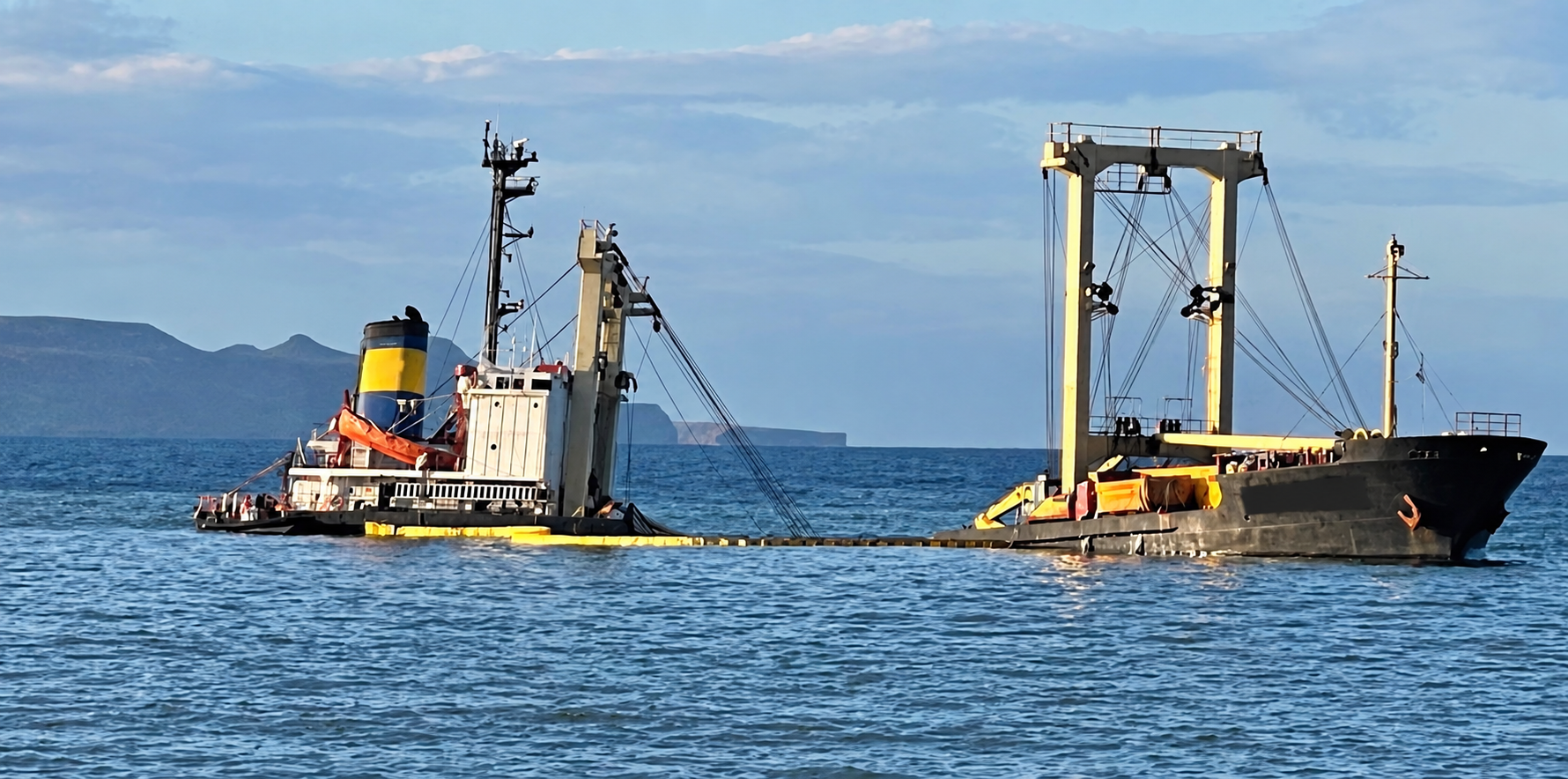
Yusuf Gümüş Law Firm represented and advised Turkish cargo owners in a complex maritime salvage matter arising from the grounding and subsequent break-up of a cargo vessel during her voyage from Türkiye to Libya.
The matter concerned salvage services performed under an amended Lloyd’s Open Form (LOF) and involved substantial issues relating to the valuation of the salved cargo, Article 13 salvage remuneration, salvage and storage security, and storage-related expenses.
Given the specialist nature of LOF salvage proceedings and the involvement of London maritime arbitration, our firm worked with and received specialist support from English maritime lawyers. Yusuf Gümüş Law Firm remained actively involved in the conduct of the matter, preparation and development of the cargo owners’ case, assessment of the underlying evidence, the arbitration process, and settlement negotiations on behalf of the Turkish cargo interests.
Background
The vessel had loaded approximately 4,134 MT of deformed steel bars together with five bulk cement semi-trailers at İskenderun, Türkiye, for carriage to Misurata, Libya. The total commercial invoice value of the cargo as loaded was approximately USD 3.42 million.
During the voyage, while passing a Greek island, the vessel grounded and subsequently broke in two.
Salvage services were carried out over a period of approximately 25 days. Despite difficult winter weather and sea conditions, a substantial proportion of the cargo was successfully recovered, including approximately 3,717 MT of steel bars and three bulk cement semi-trailers.
Following completion of the salvage services, the cargo owners provided salvage security and storage security under escrow arrangements.
The Dispute
One of the principal issues was the determination of the salved value of the cargo, which was fundamental to the assessment of any potential salvage award under Article 13.
There was a substantial difference between the valuations advanced by the salvors and those advanced on behalf of the cargo owners. The competing figures were not calculated on the same basis and resulted in a difference of approximately 40%.
The valuation of the recovered steel cargo required consideration of several elements, including:
- the sound market value of the steel;
- the applicable premium for 8 mm steel bars;
- transportation costs from Greece to Türkiye;
- sandblasting and remedial costs; and
- the physical condition of the cargo, including tensile test results and corrosion findings.
Separate valuation issues arose in relation to the recovered bulk cement semi-trailers, particularly concerning the extent of damage and the appropriate deductions for repair costs.
Our Role
Yusuf Gümüş Law Firm took an active role in developing the cargo owners’ position and assembling the factual and documentary basis upon which the claim could be evaluated, presented and negotiated.
Our work included analysing the circumstances of the casualty and salvage operation, developing the evidential basis for the cargo valuation, assessing the competing salved-value calculations, and considering the deductions and expenses that could properly be taken into account.
The dispute proceeded to London maritime arbitration under the LOF framework. Throughout the arbitration process, we continued to represent and advise the Turkish cargo interests, while coordinating with specialist English maritime counsel on matters requiring English maritime law and LOF arbitration expertise.
We also participated actively in negotiations concerning the total salved fund and the amount of salvage remuneration while the arbitration was pending.
The case required an assessment not merely of cargo values but also of the full range of factors relevant to an Article 13 salvage award, including the degree of danger, the success achieved by the salvors, the skill and efforts involved, the duration and conditions of the operation, the equipment deployed, the risks undertaken and the salvors’ out-of-pocket expenditure.
A further issue concerned Clause 6 and storage charges, including whether certain storage expenses incurred before the provision of security should properly fall within expenses associated with the Article 13 claim rather than being treated solely as separate storage costs.
Settlement Strategy
The substantial gap between the parties’ respective valuations initially made an amicable resolution difficult.
Against this background, our firm assessed both the strengths of the cargo owners’ position and the risks associated with proceeding to a hearing and final LOF award. Particular consideration was given to the competing evidence concerning the salved value, the severity of the dangers encountered, the availability of alternative assistance, the salvors’ expenditure, Clause 6 expenses and the disputed storage charges.
Yusuf Gümüş Law Firm was directly involved in the settlement negotiations and advised the cargo owners on the legal and commercial implications of the available alternatives. Based on our assessment of the evidential position, potential exposure and the risks associated with proceeding further with the arbitration, we recommended an amicable resolution and worked closely with the client throughout the decision-making process.
Outcome
The dispute proceeded to London maritime arbitration under the LOF framework. Yusuf Gümüş Law Firm continued to represent and advise the Turkish cargo interests throughout the arbitration process, working in coordination with specialist English maritime counsel.
Our firm remained actively involved in the preparation and development of the cargo owners’ case and in the settlement negotiations conducted while the arbitration was pending.
Following extensive negotiations, and after advising the client on the evidential position, potential exposure and the legal and commercial risks of proceeding further with the arbitration, the parties reached an amicable settlement before the matter proceeded to a hearing.
Accordingly, the dispute was resolved without the need for a final hearing or arbitral award.
The case illustrates the importance of combining detailed factual and documentary preparation, specialist LOF expertise and effective settlement strategy in maritime salvage disputes. In particular, where a substantial difference exists between the parties’ respective assessments of the salved fund, the quality of the valuation evidence and the strategic assessment of the potential Article 13 award may be decisive in achieving a negotiated resolution.
Yusuf Gümüş Law Firm represented the Turkish cargo interests throughout the matter, working in cooperation with specialist English maritime counsel where required, while maintaining an active role in the preparation of the case, the development of the cargo owners’ position, the London maritime arbitration proceedings and the settlement negotiations that ultimately resulted in an amicable resolution.